The Morning After
“So, Brodie, how are you today, dear one?” (Brodie is not her actual name)
It was yesterday morning, the day after the 2024 election, and I was in my second telehealth session of the day. I had stayed up too late watching election results and was weary from the mental load of trying to integrate the country’s choice with my understanding of human behavior, core values, and hopes for the future.
She sat quietly for several seconds, and big tears welled in her eyes that I could see on my computer screen. “I’m not sure.”
Brodie is 20. This was her first election, and she had been hopeful about Kamala Harris’s vision for the future. She is at the tail end of her journey from adolescence to adulthood and trying to figure out what her place in the grown-up world will be. She now is worried about what the election results will mean for her friends whose legal rights may be on shakier ground, the climate, and for people who live in faraway places like Gaza and Ukraine.
I found myself wondering how I could be helpful to this beautiful soul. Should I give her a synopsis of the comments that I had made to my fourteen-year-old children about honoring the democratic principles the country is predicated upon, remembering that we learn from times that challenge us, and honoring that most people want the same basic things like love and safety that we do? Should I comfort her with a history lesson about how the country’s leadership often swings like the giant pirate ship ride at the State Fair and life success is often determined by our ability to pull our seat belt a bit tighter and settle in? Should I remind her that change is inevitable and, as Buddha advised us, resistance of change leads to suffering?
I opted instead for a different path. I encouraged her to share all of her fears with me, so that (1) she did not carry them alone and (2) they did not remain trapped inside of her, lying dormant until the moment is right for them to rise and overwhelm her with helplessness.
Not surprisingly, she had several fears. Many were general, others were specific. Many were realistic, others were unlikely to occur. What did they all have in common?
Each one is beyond her control right now.
Life is lived in the space between “just happened” and “not yet.” When we are pulled into our fears, it is easy to lose sight of the fact that they are imagination-based and not occurring right now. Yes, they may be very likely to happen soon…but they are not happening right now. They breed helplessness and a lack of personal agency. How do we handle those moments when our fears arise and pull us into future thinking and away from the present moment? We start with a deep breath, validate that this moment is very difficult, and pull ourselves back to right now.
Identifying Feelings (Not Just Thoughts)
After Brodie got through listing her fears, we explored her feelings that fuel them.
I have a stack of feelings index cards. There are about 60 of them and they range from positive emotional states like “happy” and “inspired” to negative ones like “angry” or “afraid.” They also range in terms of intensity (e.g. content v. elated, insecure v. terrified). Brodie and I sorted these cards into 2 categories: “Yes, this fits” and “No, it doesn’t.” After I had them all laid out, I texted the picture to her and asked her what she thought. Her response was simple: “I’ve got some big feelings and most of them don’t feel good.” Can you relate?
After we have identified our current feelings, we disentangle them from our brain’s efforts to protect us via mental distractions (e.g. creating solutions to events that aren’t happening right now, crafting the perfect response to an argument that occurred two days ago) or undesirable behaviors (e.g. mindless social media scrolling, excessive food or alcohol intake, overreacting to loved ones’ comments/behaviors).
A Simple Self-Compassion Practice
Then I taught Brodie my go-to strategy when I feel big feelings churning in my body and bouncing around my brain like exploding popcorn kernels. I ask myself what I need right now. Sometimes I need courage, other times I need peace, often I need resilience. Once I have chosen one word, I settle into a comfortable position for a series of 10 deep breaths. I inhale my chosen word and release it on my exhale. Sometimes I do a modified Mindful Self-Compassion practice (hat tip to Kristin Neff & Chris Germer’s wonderful program) and inhale “compassion for me” and exhale “compassion for you.” Sometimes the “you” is a specific person. Yesterday it was “all of us who need it right now.”
“So, Brodie, as our session is drawing to a close, how are you feeling right now?”
“Better.” I silently put “better” into the win column.
The Day After: What Helps vs. What Doesn’t
Thursday morning. The talk show hosts are dissecting what went wrong with Harris’s campaign and implications of election results for our current society and the future of the country. Social media posts about what countries are friendly to US ex-patriates are appearing more frequently, as are posts from relieved Americans who are celebrating the red wave and encouraging their grieving friends to move on.
Those responses, while understandable and hopefully well-intentioned, likely aren’t going to be helpful right now to people who are grieving or who share Brodie’s fears about the broader implications of the election results.
What would I recommend instead?
- Name your fears. Write them down without judgment. Then hold them with self-compassion. These fears are big and heavy to carry around.
- Identify the other feelings that are fueling the fears and giving them residential space in your mind. If you don’t have a stack of feelings index cards, check out a feelings wheel and simply ask yourself “Does this one fit?” Honor the emotional complexity and the weight of holding so many difficult feelings simultaneously.
- After you have done those steps, choose your next step intentionally. What will balance the thoughts and feelings and remind you that you are resilient, you will survive this current challenge, and you only need to live this moment right now? Your future self will handle what arises, just as your past self took care of business that already occurred.
A deep breath with a centering word? A new page in your adult coloring book? A jigsaw puzzle or a puzzle game on your phone? Is there a book on your shelf that you’ve wanted to explore but haven’t yet? A walk around your neighborhood? Setting up a playdate with a friend? Creating a 10-item gratitude list?
What might feel good right now?
When we choose the next step without the emotional and mental self-reflection, we risk an incomplete addressing of our thoughts and feelings. They then are more likely to resurface and result in an exaggerated and/or undesirable reaction to daily life events and social interactions.
A Grounding Moment
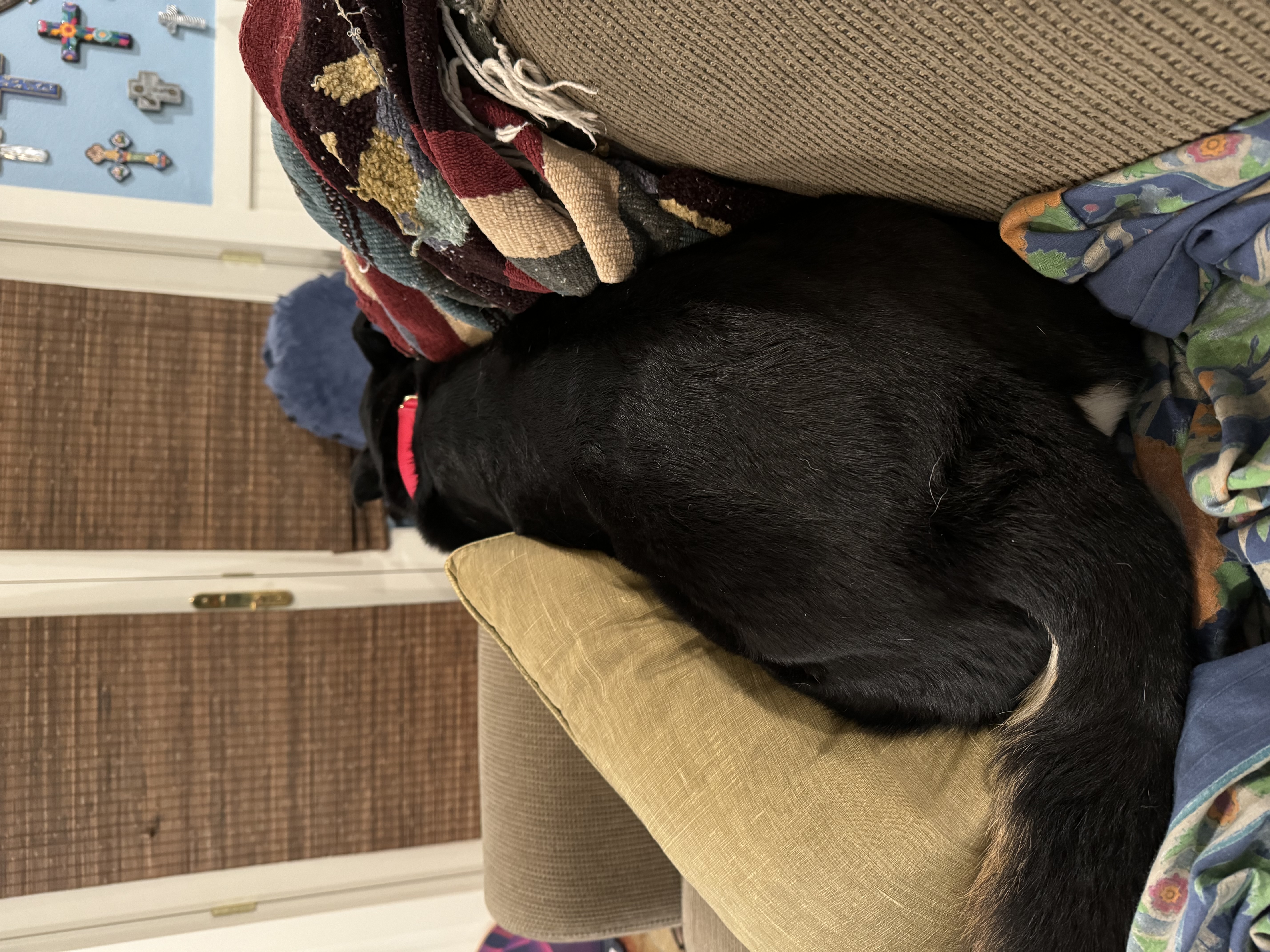
As I was finishing this blog, my dog Maui joined me on the couch. He settled in among the pillows. I stopped typing and started petting. I found myself paying attention to the same things that mattered to him. The couch feels comfortable. It feels good to share a space with someone I love. The ceiling fan makes a gentle noise as it spreads the air over us. There is something comforting about listening to Angel and Giovanni discuss a favored video game in another room. I sat for a few minutes with Maui and simply listened to my house’s symphony and it grounded me in a way that I have desperately needed for a very long time.
Today, dear ones, let’s take a page from Maui’s book. Let’s just live this moment right now. When our fears of the future arise, let’s make space for them and the emotions that accompany them, and then return our focus to this moment that surrounds us right now. Let’s give ourselves grace and self-compassion and let’s commit to giving grace to others who also are struggling with this being human journey that we’re all traveling.
Ubuntu, fellow travelers.
— Jennifer