Discover how mindfulness and self-compassion can help us find peace when our thoughts spiral and pull our attention away from the present moment.
I was in Chicago last weekend for a friend’s wedding. The morning of the wedding, three friends and I decided to go to the Lincoln Park Conservatory after a lovely breakfast at a delightful café.
We were chatting away with the ease that only forty-plus-year friendships can carry. The conversation flowed from sandwich generation struggles to career goals to political issues that affect our middle-aged lives. I was still sipping my chai latte as the conversation meandered, and the lingering cinnamon enhanced my mood and mindful appreciation of the moment.
My phone rang unexpectedly. A number I recognized and a call I needed to answer, not knowing if it might be something unimportant or very important.
I didn’t want to answer. It wasn’t about the caller. It was about me. I was thoroughly enjoying the moment I was living and didn’t want my everyday life to intrude.
My brain instantly began running through options.
Let the call go to voicemail and continue in the moment?
Answer it?
The potential that it could be very important won.
“Hi, Taylor. What’s going on?”
“I know you’re busy. I need two minutes of your time.”
And, before I had a chance to respond, Taylor proceeded to launch into a string of concerns about Maui. Some were requests for clarification; others were concerns about things that were unlikely to happen.
My friends moved forward and I walked slowly behind, listening to Taylor’s concerns.
I felt my irritation rising and along with it, a mindful awareness of my clear desire to end the conversation and return to the moment I had been living.
I love Taylor and she was doing me a favor. I thoroughly appreciated what she was doing, taking responsibility for an important piece of my life while I was traveling.
That said, I was fully aware that there was absolutely nothing I could do about Maui’s issue a three-hour plane ride away. I took a deep breath and resisted the urge to interrupt Taylor to speed the intrusion along.
Taylor needed a few minutes more than her requested two, but it was a brief conversation that ended with a mutually agreeable plan and my commitment to following up with Maui’s vet when I returned.
“All okay?” My friend joined me.
“Yeah, it’s fine.” I smiled at her. “I’m fine. Just a bunch of stuff that I can’t do much about right now.”
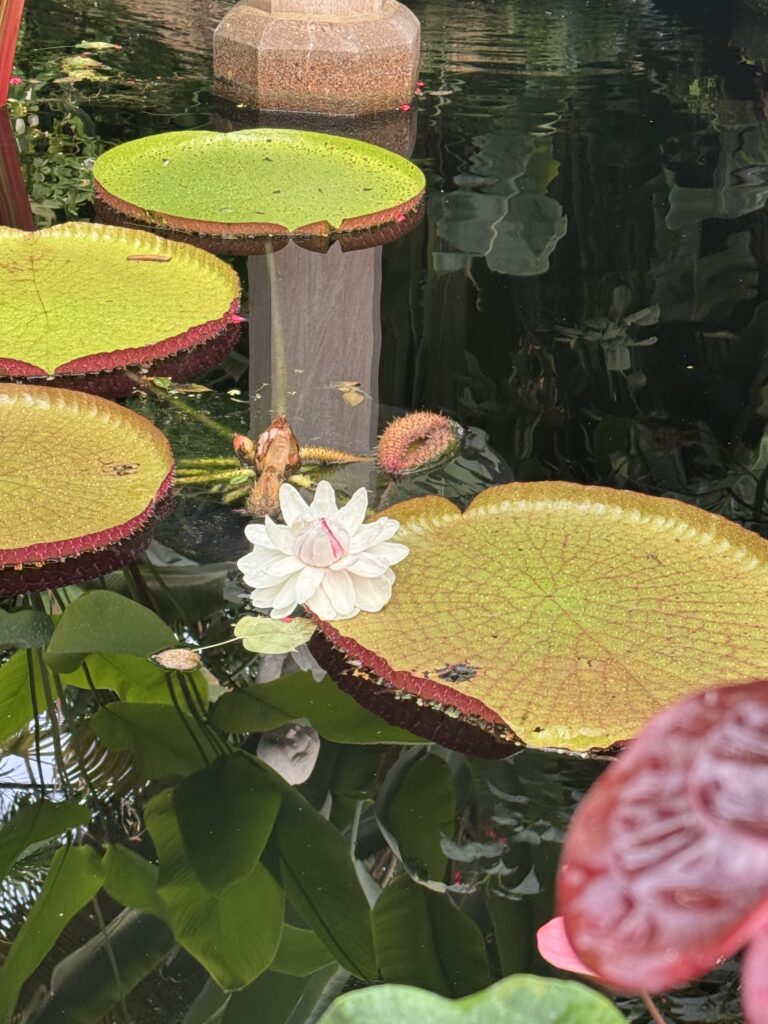
We went into the Conservatory. Almost immediately, we were greeted by a volunteer who wanted to inform us about the lotus flower that was blooming, per her report a very unusual occurrence that we were fortunate to witness. I tried to join my friends in their interest in her knowledge, but my irritation intruded.
My thoughts were spinning.
Is Maui okay?
He was fine before I dropped him off. It’s likely the stress of boarding.
I really need to find another solution.
I was having such a good time and was so excited.
Now I just feel grouchy and irritable.
Maybe some of this is because I didn’t get enough sleep and I know we’ve got a full day ahead followed by a comedy show after dinner?
Probably. And I don’t think a nap is going to tie in with a wedding arrival time of 12:45.
Is this about wanting to have a break from managing the mental and emotional load of a self-employed single mother and just enjoy being with my friends that I never have enough time with?
Damn. All of the above.
I looked around me and realized that I was not paying attention to the volunteer, and my friends were still attentively listening. My thoughts continued.
I don’t want to listen to her talk about the lotus flower.
I’m overstimulated.
What do I need right now?
And then came a question I ask clients at least twice a week.
What does self-compassion look like right now?
I turned to my friend Erin and told her that I needed to just wander for a bit. She nodded.
I put in my AirPods, turned on my Insight Timer app, and selected soft music that could drown out any human noise.
And I started walking, intentionally focusing my attention on slowing my breathing and noticing what my senses were telling me.
The varying shades of purple and white in an orchid.
The different textures of a fern.
The way the water rippled over a rock.
The smell of clean air and nature.
I walked the loop slowly and felt my irritability fade.
I returned to the pond and the lotus flower. I sat on the bench and continued focusing on my breathing and the pond scene in front of me.
I found myself smiling at the symbolism. There I was, sitting beside a lotus flower, finding a little peace and beauty amid the muddy waters of my overstimulated thoughts.
My friends ultimately rejoined me.
“All good?” one asked.
I nodded. “All good.”
Mindfulness and Self-Compassion
Here’s the thing, fellow traveler.
Although the details of this experience were uniquely mine, having life intrude on our plans and send our thoughts spiraling is something most of us know well.
We all have been there.
Years ago, my recommendation would have been to take a few deep breaths and then tackle the thought patterns:
Label my emotional experience.
Acknowledge how it was fueling my thoughts.
Redirect my thinking to gratitudes, including that Maui was in good hands and being cared for by someone who loved him enough to worry.
Disempower my inner critic who was stealing my attention and energy.
That strategy isn’t a bad one and actually is quite helpful.
But it wasn’t the one I chose at that moment.
I chose a mindful approach, coupled with self-compassion, that would pull me away from thinking and increase my awareness of what was around me.
I intentionally focused my attention on what I could see, smell, and hear.
I asked myself what I needed in that moment when I felt the irritability.
It turns out that what I needed was rather simple once my thoughts and feelings stopped fueling each other.
A few moments of quiet. Permission to follow my own path while my loved ones took another one. Intentional attention on natural beauty instead of on responsibilities, concerns, and problem-solving.
Then when we came back together, it was all good.
“Good” didn’t mean it was fixed. Maui’s issues weren’t resolved. I was reminded about how, despite my best efforts, there is a high emotional and mental load that I carry.
“Good” meant that I was able to return to the moment without being distracted by anxiety or thoughts that weren’t relevant to the present moment. “Good” meant rejoining our meandering conversation as we continued our day.
As we left the Conservatory, I sent a silent thank you to the lotus flower for reminding me that even muddy water can nurture something beautiful.
Ubuntu, fellow traveler.
Jennifer
Check Out Previous Reflections!
If this reflection resonated with you, you may also enjoy exploring other posts from Still River Reflections.
Self-Compassion Strategies for Challenging Times: Page from Maui’s Playbook
© 2026 Jennifer Ayres, PhD | Still River Counseling, PLLC
Written with care for fellow travelers navigating life’s changing currents.
StillRiverCounseling.com | Austin, TX
Gentle Reminder: The reflections shared here are intended to offer insight and support. They are not a substitute for therapy or professional mental-health care, and reading this blog does not create a therapeutic or doctor–patient relationship.